Palo Alto vs Juniper: Side-by-Side Comparison

Feature Palo Alto NGFW Juniper Networks
Threat Intelligence

WildFire: Cloud-based malware analysis for zero-day threats. 
Advanced Threat Prevention: This is a core security service within Palo Alto NGFWs that provides protection against exploits.
AutoFocus: A threat intelligence service that provides in-depth context and analysis of threats.
Unit 42: Palo Alto Networks' threat intelligence team.

Utilizes Juniper Threat Labs for threat intelligence, providing real-time threat intelligence, malware analysis, and behavioral detection to protect against evolving cyber threats.

Intrusion Prevention (IPS)

Signature-based IPS integrated with Threat Prevention and ML-based analysis.

IPS is built into the SRX platform, providing a unified solution for routing, firewalling, and intrusion prevention.

Encrypted Traffic Analysis

SSL Decryption with automated policy-based inspection.

Supports SSL inspection to decrypt and analyze encrypted traffic for threats.

Zero Trust & Identity-Based Security

Zero Trust enforcement with user and application awareness (App-ID & User-ID).

Juniper supports ZTNA architectures via centralized security policies, dynamic session control, and end-to-end encryption.

Cloud Security & SASE

Prisma Access: Full cloud-based SASE architecture with Zero Trust controls.

Cloud-ready solutions with its SRX Series Firewalls and integrates with Juniper's Security Director for centralized management.

Automation & AI

Cortex AI & ML-based threat detection.

AI-driven operations through its Mist AI platform.

Policy Management

Panorama centralized management with AI-driven policies.
Granular role-based access & segmentation.

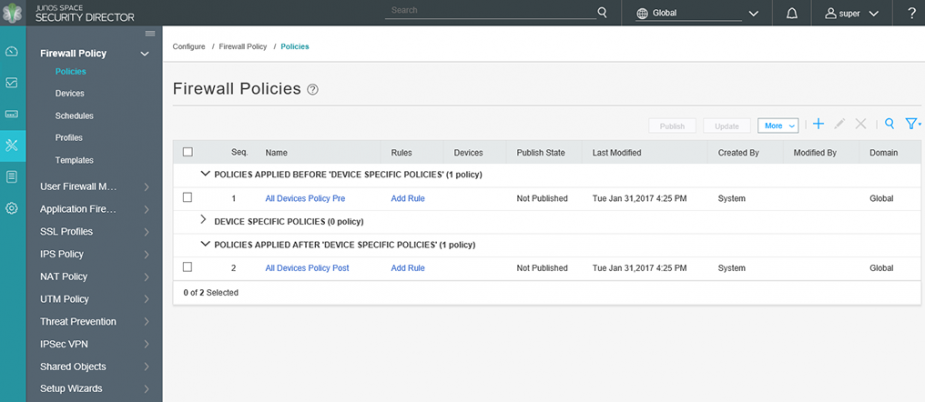
Junos Space Security Director provides centralized, scalable management for Juniper firewalls, enabling policy creation, threat visibility, and compliance monitoring.

Local Agent

Endpoint protection features like Cortex XDR require a separate agent installed on the endpoint device. The firewall itself operates independently without a local agent. 

Integration with third-party endpoint solutions is possible, but Juniper doesn’t include the use of a proprietary agent.

Sandboxing

WildFire is a cloud-based malware analysis and prevention service that detects, analyzes, and blocks zero-day threats using machine learning and sandboxing techniques.

Juniper Sky Advanced Threat Prevention (ATP) is a cloud-based service that uses sandboxing, machine learning, and threat intelligence.

Main Competitors

Cisco, Fortinet, Sonicwall. 

Cisco, Fortinet, Palo Alto Networks.​ 

  Palo Alto NGFW Juniper Networks

Is it designed more effectively for enterprises or SMBs?


Palo Alto's Next-Generation Firewalls (NGFWs) are renowned for their robust security features. However, users often note that these firewalls may be cost-prohibitive for small businesses. They suggest that while Palo Alto NGFWs offer excellent protection, the high price point and complexity might not align with the needs and budgets of smaller organizations. Exploring alternative solutions that balance security and affordability could be more suitable for small business environments.​

Juniper Networks firewalls offer strong security features and scalability, but may be better suited for mid-sized to larger organizations. While technically capable, SMBs might find Juniper’s solutions more complex and costly compared to alternatives specifically tailored for smaller business environments, such as Fortinet or Sophos.

Distinctive Features

Palo Alto Networks Application Identity identifies and classifies applications in real time, regardless of port, protocol, or encryption. It enables precise security policies by recognizing app behavior rather than relying on traditional IP-based rules. This helps organizations enforce access control, prevent threats, and optimize network performance by allowing or blocking applications based on security needs. It’s a key feature of Palo Alto’s Next-Generation Firewalls, ensuring visibility and control over network traffic.

Juniper Apstra intent-based networking software automates and validates the design, deployment, and operation of data center networks.

Juniper SRX devices support advanced Layer 3 features, including VRFs, VRRP with multihoming, BGP, and SD-WAN. These capabilities make them suitable for complex networking scenarios that require robust routing and segmentation.

Common Criticisms

Palo Alto NGFWs as highly capable, feature-rich, and effective security devices with an intuitive management interface, often considered a technical leader. However, this comes at a very high cost, which is a major barrier for many. Concerns about potential bugs in new software releases and mixed experiences with technical support are also frequently mentioned drawbacks. 

Juniper firewalls, particularly the SRX series, lag behind competitors like Palo Alto, Cisco, and Fortinet in advanced security features such as deep application inspection, integrated threat intelligence, and user-friendly management tools.


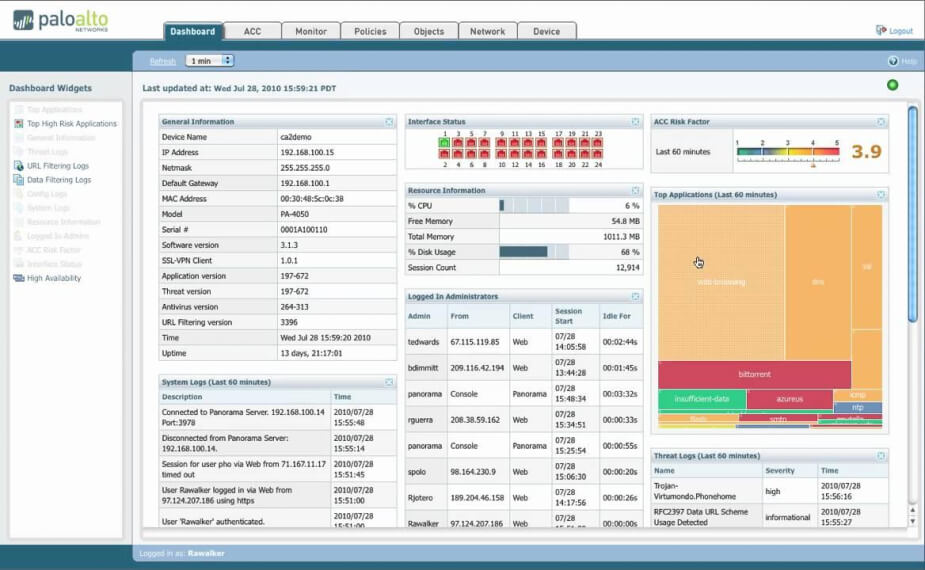
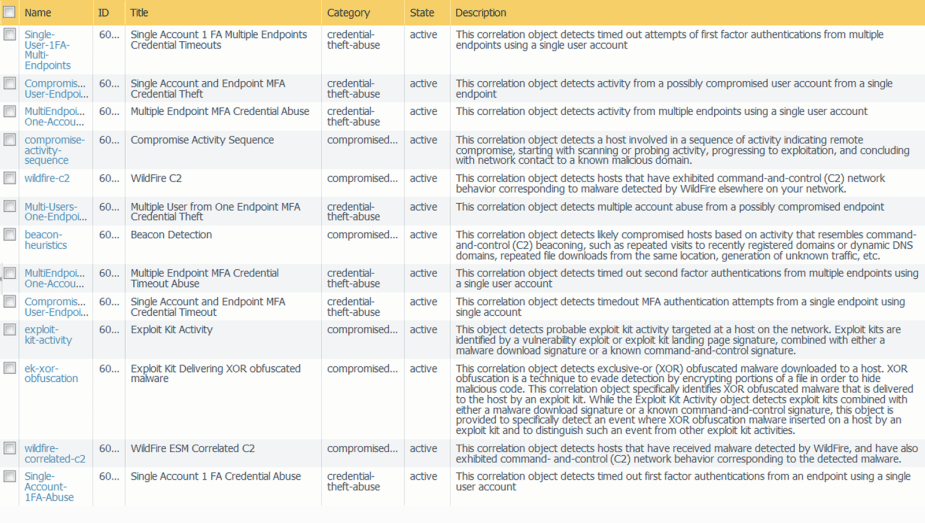
Palo Alto NGFW Dashboard & UI

Palo Alto Partners

Palo Alto partners provide businesses with expert consultation, seamless deployment, and technical support. Below is a list of some of the leading Tenable partners in the market:

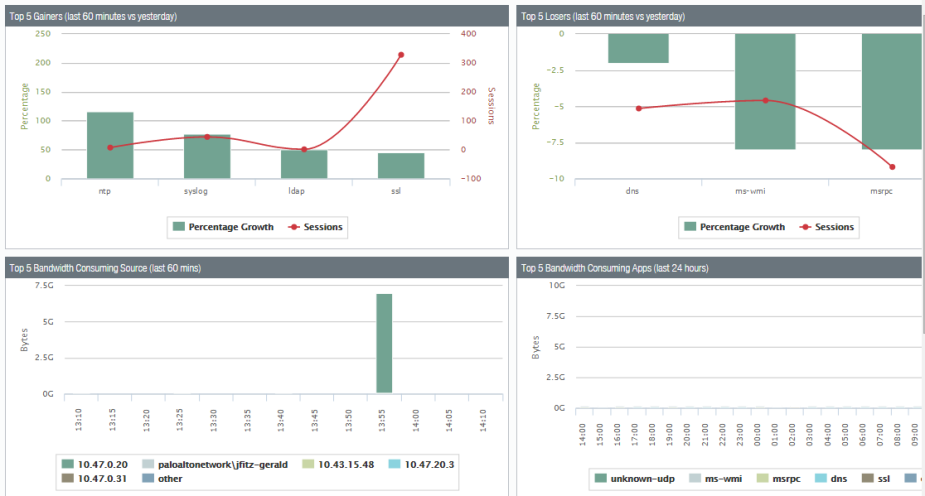
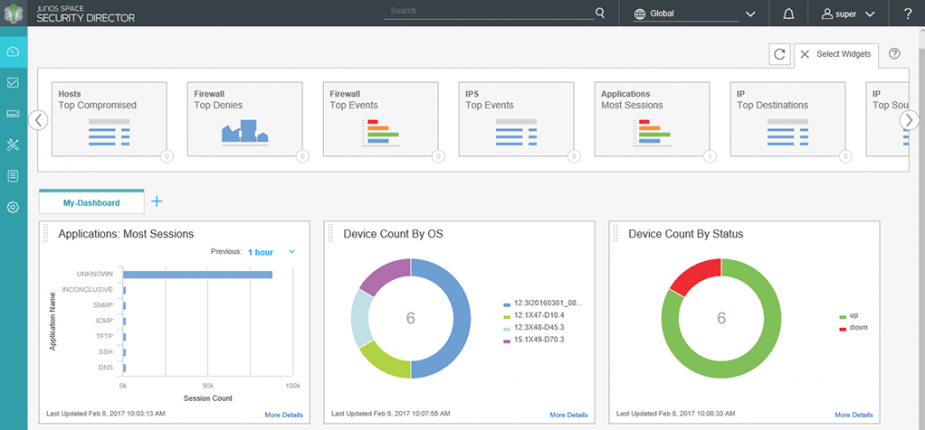
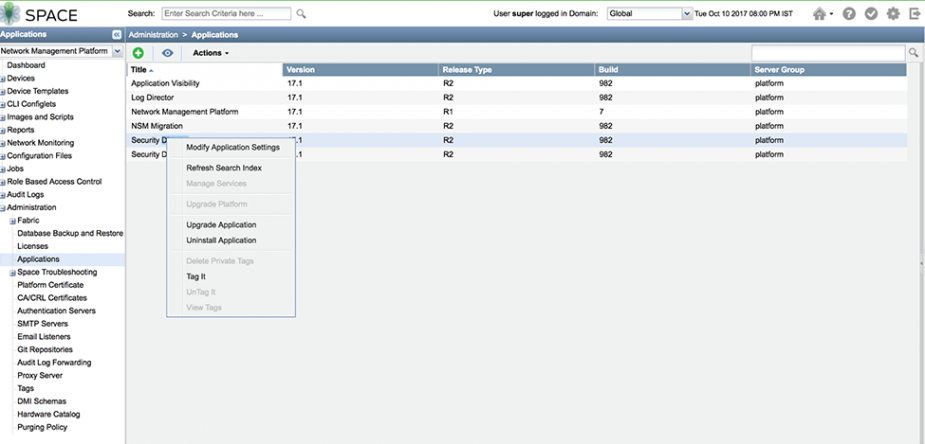
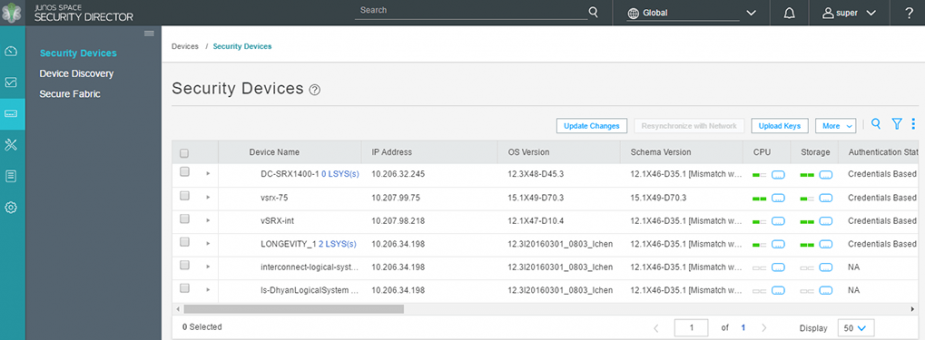
Juniper Networks Dashboard & UI

Juniper Partners

Juniper partners provide businesses with expert consultation, seamless deployment, and technical support. Below is a list of some of the leading Tenable partners in the market: