This blog was originally published by Corsica Technologies here
AI Strategy: 7 Real-World Examples That Drive Business Value
Your AI journey starts here.
Key takeaways:
- Align AI strategy with real operational challenges and measurable results—not hype.
- Use a 5-step approach: identify champions, gather use cases, test, define strategy, and communicate clearly.
- Set governance policies to ensure ethical, secure, and effective AI use.
- Bridge the AI skills gap by building internal talent or partnering with experts.
- Roll out AI in phases with pilots, testing, and training before full deployment.

What is AI strategy?
Understanding AI and its business applications
Essential AI terminology for business leaders
As you develop your AI strategy framework, you’ll encounter these important terms:
- Machine learning (ML): A subfield of AI focused on creating algorithms that can reach autonomous conclusions without explicit programming.
- Natural language processing (NLP): AI technology enabling machines to read, understand, and produce natural human language.
- Large language model (LLM): A type of machine learning trained on vast bodies of text to produce human-like content.
- Neural network: A form of machine learning using interconnected nodes that mimic the human brain’s structure to execute complex tasks.
RPA vs. AI: Understanding the difference
When developing your AI strategy, it’s important to distinguish between RPA and AI:
RPA (robotic process automation) automates repetitive tasks based on clearly-defined rules. It’s not autonomous but highly programmed.
Consider this example:
- RPA for email sorting: “If email is from ‘johndoe,’ move it to the ‘johndoe’ folder. If it’s from ‘janedoe,’ move it to the ‘janedoe’ folder.”
- AI for email sorting: “Move emails to folders based on the sender. If a folder doesn’t exist, create one.”

The state of AI adoption in business
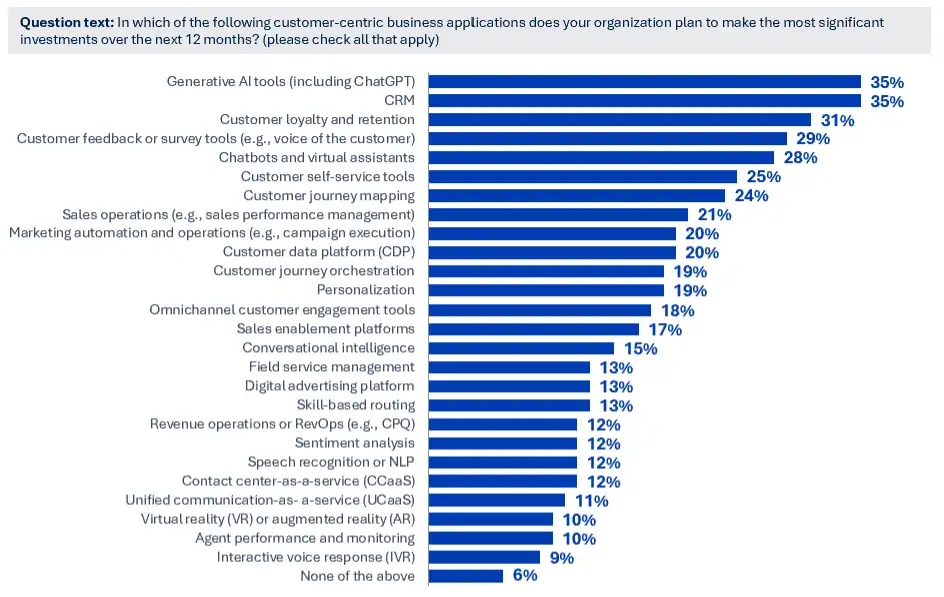
- AI is tied for the #1 customer-centric investment companies plan to make in the next 12 months, with 35% of organizations prioritizing this technology (Source: Informa TechTarget’s Report on 2025 Technology Priorities).
- The only other technology with comparable investment is CRM (customer relationship management), also at 35%.
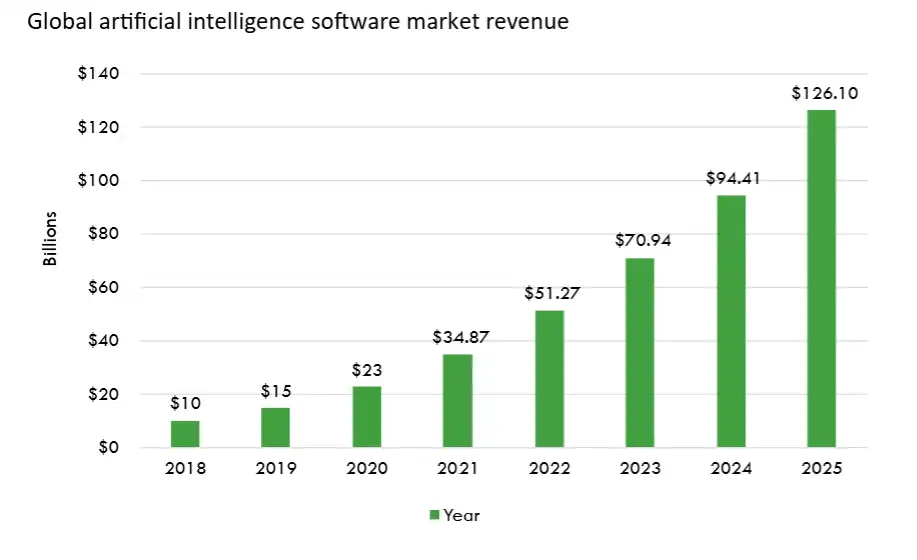
- AI software revenue has grown 5x since 2020, reflecting the rapidly increasing demand.
Which departments lead AI adoption?

7 AI strategies that are winning in real life
1. Professional services: meeting summaries and automated scheduling
- Challenge: Employees were overwhelmed by processing information from numerous meetings.
- Solution: Using Microsoft Teams with automatic transcription, Microsoft Copilot reads entire transcripts and produces clean, bulleted summaries of key points.
- Additional benefit: AI handles scheduling calls with clients, reducing administrative costs.
2. Healthcare: AI-powered drug cost management
- Detecting anomalies in drug costs
- Predicting increases in drug costs
- Using AI to forecast outcomes of drug price negotiations as authorized by the Inflation Reduction Act
3. Manufacturing: CAD design and predictive maintenance
- AI-enhanced CAD design: Designers input various parameters while AI generates multiple design options that meet the requirements.
- AI-powered predictive maintenance: Technicians detect emerging mechanical issues before they cause manufacturing shutdowns.
4. Distribution: inventory and supply chain optimization
- Predicting demand shifts based on historical data and current trends
- Managing inventory using a just-in-time (JIT) approach
- Allocating warehouse space based on order volume
5. Software development: enhanced coding efficiency
- AI provides realistic inline suggestions in Visual Studio based on actual data such as TSQL queries against real databases
- AI helps developers start projects by writing initial code based on specific requirements, which developers then refine
6. Higher education: improving learning outcomes
- AI-powered exam proctoring to prevent cheating and encourage proper preparation
- AI-powered plagiarism detection that compares student work against vast academic text repositories
- AI-powered financial analysis to optimize resource allocation
7. Local government: traffic flow optimization

How to develop an effective AI strategy framework

1. Identify and engage AI champions
2. Crowdsource real AI use cases
- What time-consuming or mundane tasks slow down your workday?
- How might AI solve these problems?
3. Refine your AI use cases
4. Articulate your AI strategy
5. Implement AI solutions


Top AI business solutions and tools
- Best chatbot for personal use: ChatGPT
- Best chatbot for business: Microsoft Copilot
- Best AI agent for business: Manus
- Best AI for video generation: HeyGen
- Best AI search for business: Perplexity
- Best financial AI: FP&A Genius
- Best supply chain AI: Blue Yonder Orchestrator
- Best coding AI: Qodo
- Best marketing website chatbot: Warmly
- Best customer service AI: Salesforce Agentforce
It’s important to choose an AI strategy consultant who can help you evaluate these tools against their specific use cases to identify the optimal solutions for their business needs. A vendor-neutral approach ensures you get recommendations based on your requirements, not sales quotas.
AI Tools within the modern SOC
When choosing a SOC (Security Operations Center) provider, it’s important to look for one that actively evaluates and updates its toolset to stay ahead of emerging threats. The right partner will leverage advanced AI capabilities to enhance cybersecurity while maintaining efficiency and effectiveness.
While specific tools may not be publicly disclosed for security reasons, a strong SOC provider will use powerful, AI-driven solutions to deliver continuous, 24/7/365 protection.

Building your AI team: internal resources vs. expert partners
The AI skills gap challenge
You could approach AI implementation by hiring experts or leveraging existing team members’ expertise. If your staff has the necessary experience and bandwidth, this approach can work well. However, most IT teams are already stretched thin, and developing an effective AI strategy requires dedicated time and focus.
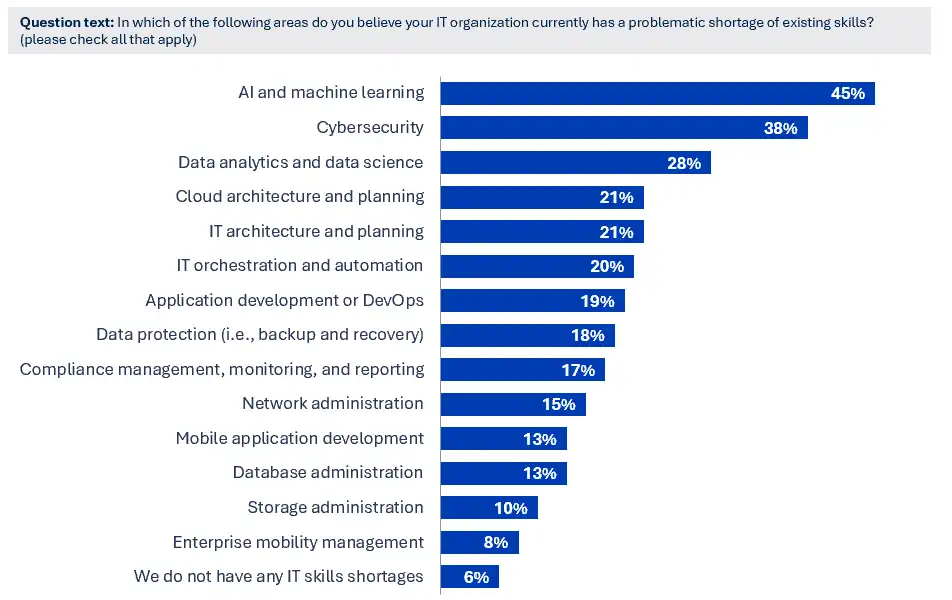
While using internal staff for AI implementation is possible, it depends on finding, hiring, and retaining AI experts who can dedicate sufficient time to your initiatives.
AI consulting services: bridging the expertise gap
This is why many organizations partner with top AI consulting firms to develop and implement their AI strategy. Expert partners like Corsica Technologies bring the bandwidth and experience to evaluate your operations, challenges, and AI opportunities.
- Strategic assessment of your AI readiness and opportunities
- Customized AI strategy framework development
- Identification of high-impact, low-effort implementation opportunities
- Vendor-neutral technology recommendations
- Implementation support and change management
- Ongoing optimization and measurement
We work collaboratively with your team, transferring knowledge throughout the process to build internal capabilities while delivering immediate results. Our approach combines technical expertise with business acumen to ensure your AI initiatives drive measurable value.

AI governance: ensuring ethical and secure implementation
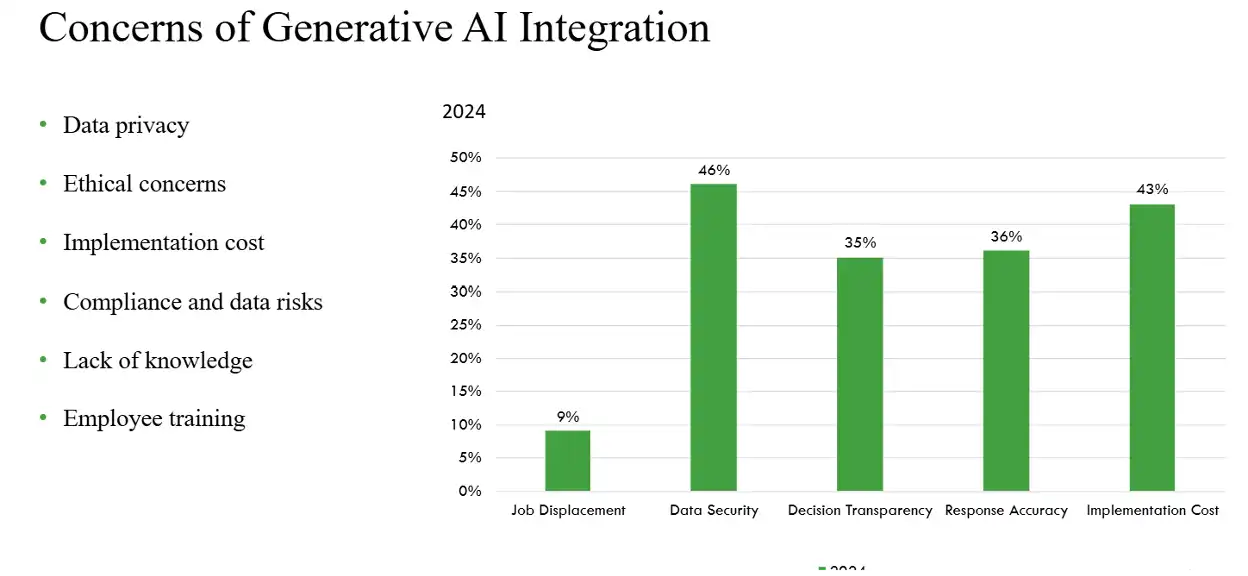
The importance of AI governance
- Defining a vision for AI
- Managing cultural change
- Determining ethical standards
- Ensuring data governance and cleanliness
- Addressing cybersecurity concerns
AI governance frameworks and tools
- NIST AI Risk Management Framework: Helps organizations identify unique AI-related risks
- OECD AI Principles: Guidelines promoting innovative, trustworthy AI that respects human rights and democratic values
- IEEE Ethically Aligned Design: Framework prioritizing human wellbeing in autonomous and intelligent systems
- AIGA Hourglass Model of AI Governance: Uses environmental, organizational, and systems layers to break down governance requirements

How do you integrate AI into business processes?
Our AI implementation approach
- Evaluating your team’s use cases against available AI tools to recommend the optimal solution
- Soft-launching the selected tool to a test group who documents needed configuration changes or technical integrations
- Implementing necessary configuration changes and integrations
- Rolling out the solution organization-wide with comprehensive training

What’s the future of AI for business?
AI agents
- Manus
- OpenAI Operator (currently in alpha for ChatGPT Pro users)
- Browser Use open-source AI agent
- Open Operator open-source AI agent
Quantum computing
AI for technical research
Deeper business integration

Start your AI journey with Corsica Technologies
- Develop a customized AI strategy aligned with your business goals
- Identify high-impact use cases for your organization
- Implement AI business solutions efficiently and securely
- Establish effective AI governance policies and frameworks
- Train your team to maximize AI’s potential
Ready to take the next step with your AI strategy?
Contact us today to start your transformation.